
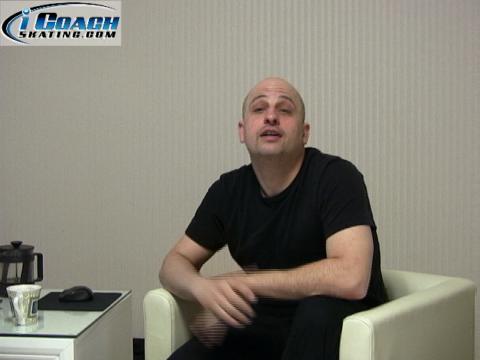
Master figure skating choreographer Chris Conte discusses how he builds higher level skating programs. This video picks up where he left off in his discussion of the tools of a traveling choreographer and building low level skating programs. In this video, Chris talks about higher level programs and helping give skaters a competitive edge in the second set of marks (component scores) in the IJS.
Chris explains that there are basically 3 types of programs.
1. Abstract program – no story, no impression of a story, just movement to music
2. Concept program – some kind of concept related to music selection, where choreographed movements are related to the concept
3. Storybook program – attempt to tell a story, start to finish through a program, through music and movement
There’s a TON of great info in this video for figure skating choreographers and figure skating coaches that choreograph their own skaters’ programs.
Chris notes that Storybook Programs used to be more prevalent in the 6.0 judging system. Chris now observes more Abstract Programs than Storybook Programs or Concept Programs as a result of IJS. IJS tends to lend itself to checklists which are more easily handled by abstract movement to music. Chris notes that it’s more challenging to create stories or build concepts on the ice with the constraints of long lists of technical requirements that IJS demands.
Chris notes, “Storybook programs are one of the more difficult ones to choreograph in regards to IJS, but it can certainly still be done. And it is, in my opinion, a really wonderful way for the skater to present all of their hard work.”
Chris shares examples of how he builds a Storybook Program. Sometimes Chris uses a story directly out of a movie or song, but often he “makes up” a specific story, with the input of the skater, based on the original story concepts and themes.
At 3:25 into the video, Chris shares his “secret sauce” for building these programs. He notes that IJS has made it somewhat easier because it allows reasonable estimates for the lengths of each section or element skated. For example, he notes a good IJS level 3 step sequence needs 25-30 seconds of music. This explains why Chris likes to edit the music himself for high level programs. He has more control of every detail and exact section lengths. (He gives the example of “cardio recovery.”)
When discussing the example, he shares tons of tricks and insights to help others create amazing programs. He also explains the benefits of using the Samplitude program he uses (www.magix.com).
Stories are inherently powerful for all human beings. Sometimes the audience may not understand the “story” of a program, but oftentimes a skater who relates strongly to the story of their program will take their performance to an entirely new level, which will be observable to those watching. In other words, sometimes a Storybook Program provides benefits primarily to the skater, to help bring out their performance.
Stay tuned for the next video in this series.
Please leave a comment below. Chris is a member of this website and would love to hear from you.

 Add to “My Favorites” (Beta testing)
One response to “Figure Skating Choreography for Advanced Skaters – Part 1 (Chris Conte)”
Just as an fyi to anybody thinking about trying the music editing software mentioned here from http://www.magix.com, I downloaded one of the trial versions and it put all kinds of advertising/search toolbars/things that pop up telling me to let it clean my computer,changed my homepage to Bing, and more junk. I was able to get rid of most of it but not this “WhiteSmoke New Customized Web Search” that has taken over where I had yahoo. Might be a good program, but I would recommend buying the disc.