

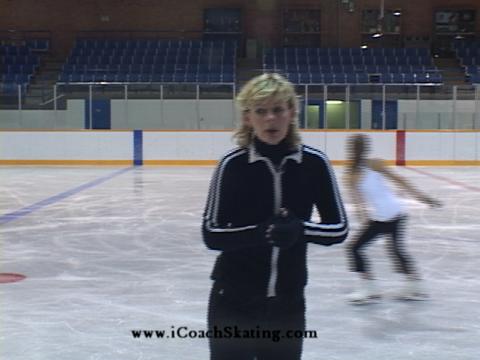
Olympic coach Michelle Leigh finisher her discussion of the axel. In this very short video she touches on what’s the same and what’s different as we move through waltz jump and axel to double and triple axel.
Upon watching this presentation, most coaches are likely to feel vindicated in their existing teaching methods. After all, Michelle says the jumps are essentially the same, except the athlete will be stronger, have stronger edges, and have a stronger air position. She also notes that the edge pressure will also be stronger. So most coaches assume that they can teach an axel as a waltz jump loop jump or a waltz jump back spin.
The problem, however, is that a very high percentage of coaches do not teach the waltz jump properly. This makes learning a single axel much more difficult than it needs to be. And it makes the transition to double and triple axel that much harder as well. When most skaters finally get to double axel, they essentially have to relearn the single axel, and most of the time their waltz jump remains incorrect forever.
So when you watch this video, please listen “between the lines.” What Michelle is saying is that teaching the waltz jump correctly from the beginning is incredibly important. Once the waltz jump has been mastered properly, the axel follows naturally as the athlete gets stronger. But if the waltz jump is not taught properly, the skater must either learn the proper technique for the first time on single axel, or they will power their way through single axel with incorrect technique. Many athletes are strong enough to do a single axel with poor technique but they eventually run into problems on double or triple axel. (Many male skaters can “power” their way through double axel, but triple axel generally requires good technique. Most female skaters require good technique for double axel.)
In any case, please review Michelle’s previous videos at iCoachSkating.com on the waltz jump and axel. Links to these videos are:
One final note: Pay close attention to Michelle’s demonstration at 0:30 as she talks about toe pressure and snap. Notice that she says an athlete needs MORE of this on double and triple axel. This implies that some of this toe pressure and snap should also already exist on single axel and even the waltz jump. She also mentions the critical arm and head movements as discussed in the videos above.

 Add to “My Favorites” (Beta testing)